
It’s true: They ARE worse than ever.
Goal 1: Keep ticks from climbing on you and your pets in the first place.
Goal 2: Get rid of any ticks you find hitching a ride, as soon as you see them.
I live in central Berkshire County, Massachusetts. Technically, I’m in a city. But the deer, groundhogs and bunnies all roam here, too. And that means there are ticks. The suddenly summer-like weather gets some credit, as well. This year, the ticks are EVERYWHERE.
I moved to the Berkshires so I could spend time outdoors. I like to dig in the dirt. I got a dog. Turns out, he likes to be outdoors, and dig in the dirt, too. But now, ticks. What are we supposed to do??

I just read a letter to the editor in the local newspaper (shout out to The Berkshire Eagle) suggesting that we in the Berkshires should warn visitors to be wary of ticks, if they plan to go for a hike. I agree with that. But this year, it isn’t as if there are places one can go, where there are no ticks. How in the Woods are we supposed to find a safe balance between the parasites we fear, and the fresh air we love?
By the time studies come out to declare that yes, New England, you are more infested than ever, and Lyme disease has gone up with it, valuable defensive opportunities may have been lost. So, I’m acting on what I see. The enemy is here. War is now.
By nature, I am a peace-loving, creature-respecting person. When I find spiders hiding in the corners of my house, I capture them and escort them outdoors. If they are precariously close to being washed down the drain, I scoot them out of harm’s way. I’ll admit there have been plenty of times when a black jumping spider (they look to me like teeny tarantulas; but they jump, instead of crawling, when they need to be evasive) has startled me into jumping a little bit, too. But spiders do good stuff, like eat gnats and mosquitos and other bad actors.
There is nothing good about ticks, unless you are someone who eats them. Chickens, turkeys, opossums and guinea fowl thrive on them. I’ll assume you, reader, are not one of those.
A decade ago, I put tick prevention in the same category as first aid for snake bites: good to know, but I’m probably not going to need to apply it. Then, a few years ago, my indoor cat snuck out, and by the time he came home a few days later, he had a tick so engorged, it looked like a pale little balloon sticking up from his head.
Next I got a dog, and I learned to scan him every time we came in from the woods. Now it’s four years later, the Spring of 2021, and it’s ticksanity out there. We pick up ticks just by walking past unmown grass. In a rural-ish city. For two years I’ve been fostering puppies and dogs who aren’t able to be put on flea and tick prevention medicine right away. Now what?!
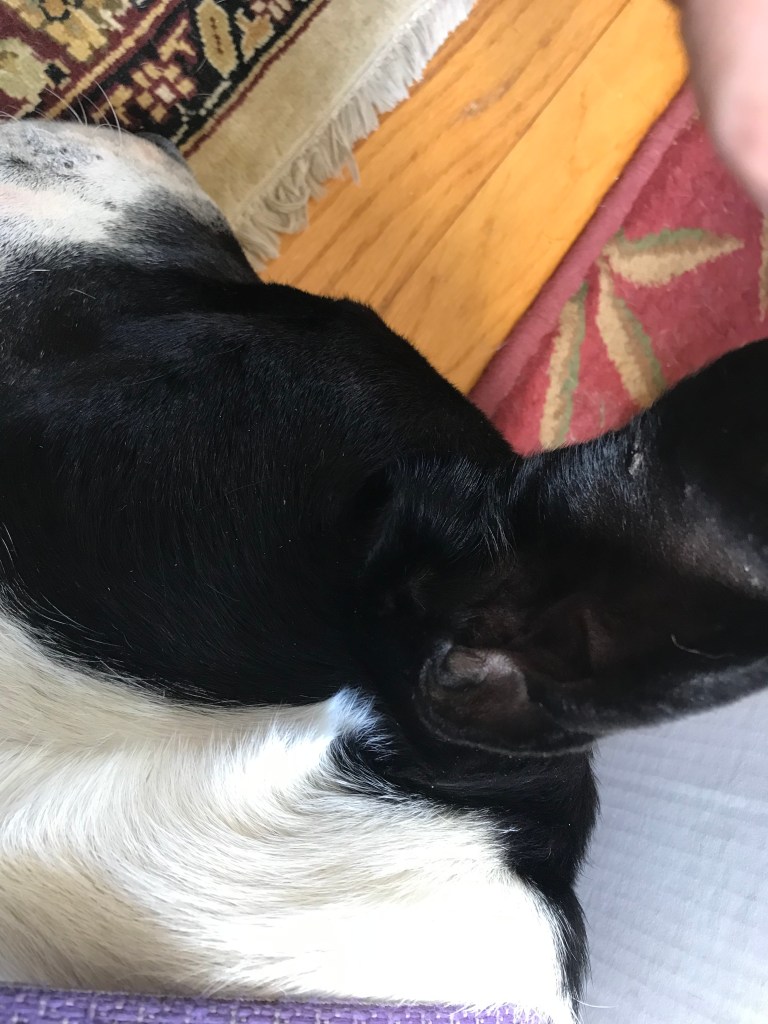
I am writing this for dog owners, or even recreational walkers, who are already doing the basics: vet-recommended flea & tick treatment (for dogs and cats); bug repellent oil or spray for you and your best friend; avoid walking through tall grass; tuck pants into white socks (I’m…too sexy for these woods, too sexy for this path… too sexy to get Lyme diz- eeze…). Thorough skin check when you get home.
I fear Lyme disease more than I fear… most things. And I have found that available advice about ticks and what to do with them is incomplete, or confusing, or just plain hard to follow. Like: Use tweezers/ Never use tweezers! Get the tick off/ Don’t touch a tick with your hands! (wait — what??).
I will describe the approach I have been using to keep ticks from getting me and my pets sick. As my menagerie has expanded, ticks have proliferated, and the weather has gotten drier, I have gotten dead serious about winning this fight. You go climbing on my 7-week-old foster puppy who just figured out that pooping outdoors is a good thing, and I am coming after you, mother sucker.
Defense 1: be toxic
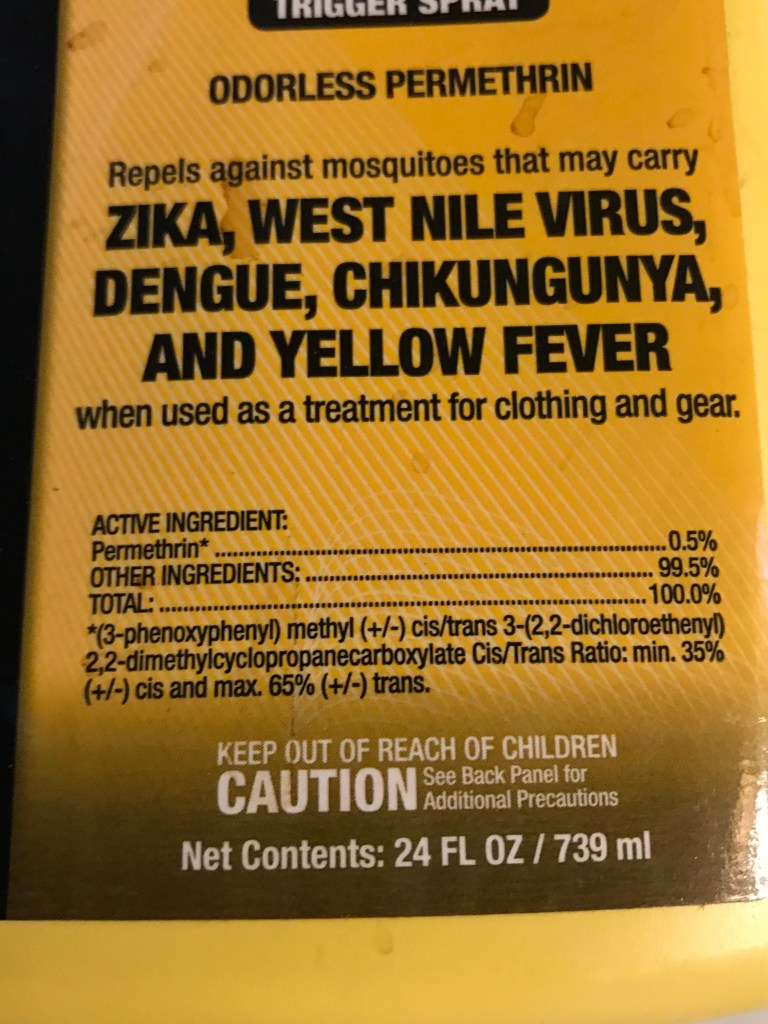
In life, I try to avoid excessive use of chemicals. But for tick prevention, I feel the little buggers have left me no choice. So I cautiously use a permethrin spray on my shoes, and on the dogs’ bedding, to kill any ticks that have the bad judgement to try to follow us home. Permethrin takes planning. It has to be sprayed on fabric — never on skin — and allowed to dry completely (out of direct sunlight, and away from animals) before you wear the item (or before dog or cat sleep on it).
I use a relatively dilute form of the spray (.5% permethrin), found in sporting goods stores in the section for hunters. The directions in and on the package are very clear and specific. Permethrin at any percentage is a neurotoxin for cats, if they are exposed to it wet. Not something to be messed with. Once dry, permethrin doesn’t have an odor, and is clear; so it behooves you to remember what you treated. Including, if it’s a blanket or towel for your pet to sleep on, which side you treated.
Ticks die relatively quickly when they come into contact with the permethrin. So this will catch any of those who didn’t die from the flea/ tick treatment you normally give your pet (ideally, those work once the tick has bitten and tried feeding on the animal). Maybe the tick was just strolling around on you or your dog, and was still scouting out a good place to bite, when your dog went to lie down on his permethrin-treated blanket. Bye-bye, tickypoo.
Defense 2: be stinky
Part of the way ticks find us is by our smell, in addition to our body heat and proximity. If we stink of oils they hate, they will avoid us, and wait for a better ride out of the grass. There are many choices for repellents that are safe for you and your dog. Please note, some products that are safe for you are not safe for your critters. The oil I use for my dog (and our fosters) is not safe for cats. It says so on the label. It includes essential oils of peppermint and rosemary, among others. This one is from a local company called Walk Your Dog With Love (walkyourdogwithlove.com), and I put it on the dogs’ collars before we go out in the neighborhood. Perhaps you’ve smelled us coming…. But it does help.
Offensive move 1: if you see it, grab it
Many times, ticks are visible on the surface of your pet (or on your clothing) before they have latched on well. They may be strolling along, looking for a juicy spot. Or they may be just settling in, amid fur, but not latched onto the skin yet. I use a take-no-prisoners approach. No waiting til we get home, no worries about touching a diseased pest. I just grab it with my fingers, hold it til I see a flat spot to drop it onto, find a stone (or use my shoe), and squish it.
If no flat spot is around, I may just try to flick it as far away from us as I can. I just don’t want it coming back. I was going to wash my hands as soon as we got home anyway, so…I’m less worried about touching disease briefly, than I am about letting a tick get settled in on my family. I’m sure this approach is not for everyone.
Offensive move 2: find, remove, murder
Once home from the walk, it’s time to do a real all-over check. It takes a few minutes, but in my experience, the dogs don’t mind one bit. From their perspective, it’s a great opportunity to get their ears fondled and their arms massaged. In my dog’s case, the trick is to get him to roll over for a tummy check, before he has relaxed all the way into REM sleep. He’s heavy.
The tools:
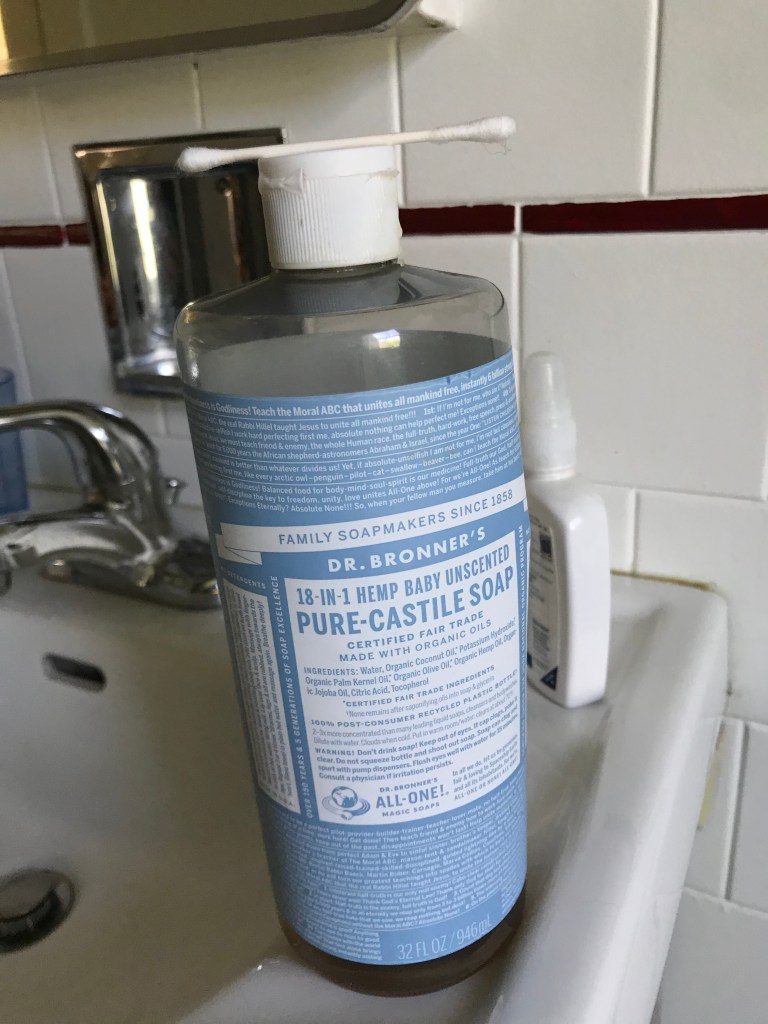
- plain liquid soap
- cotton swab
- V-shaped tick removal tool (“tick key” or similar)
- strong flashlight
- rubbing alcohol
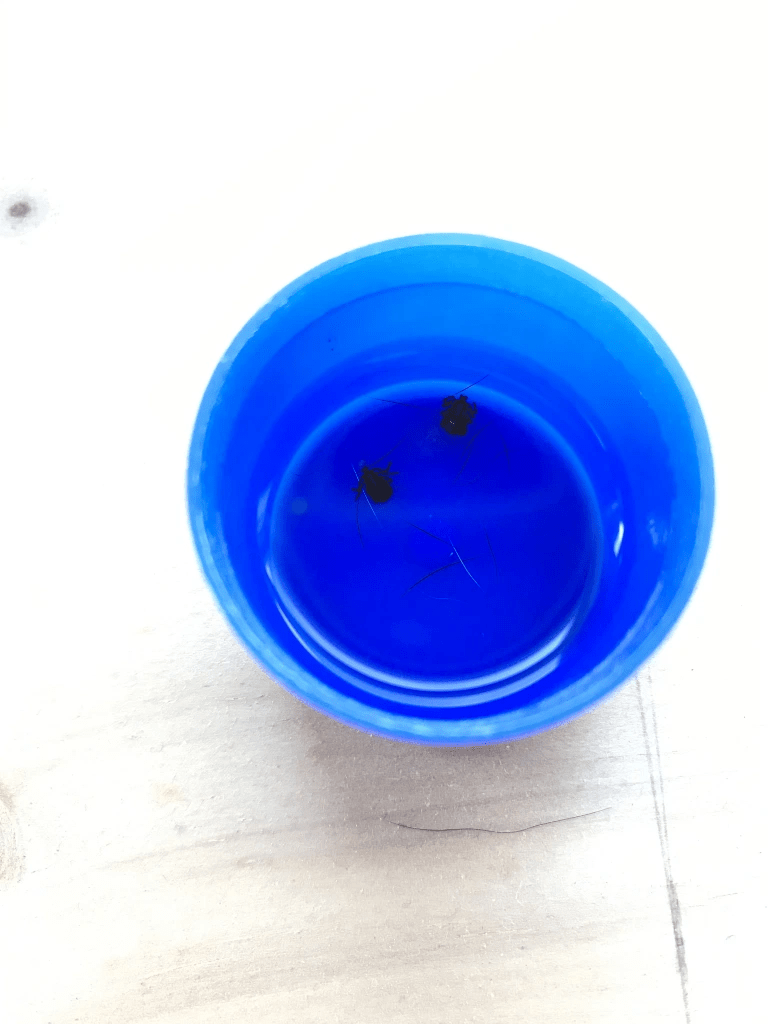
- small plastic cup, such as the cap for a travel-size hairspray; fill with the alcohol
- patient hands

Use the flashlight and your hand to see and feel all over your dog’s coat to see any small, dark bumps. Ticks lie fairly flat, but they will feel noticeably different than your dog’s usual coat. The flashlight will illuminate the nooks and crannies, and let you see better where the fur may be dark.
ESPECIALLY CHECK:
- between all toes – top view AND bottom view (dog has to be lying down);
- in and on ears, including the fairy pockets (the little pocket near base of ear);
- lower legs/ feet;
- face – likely to be the contact point when your dog sniffed the grass.
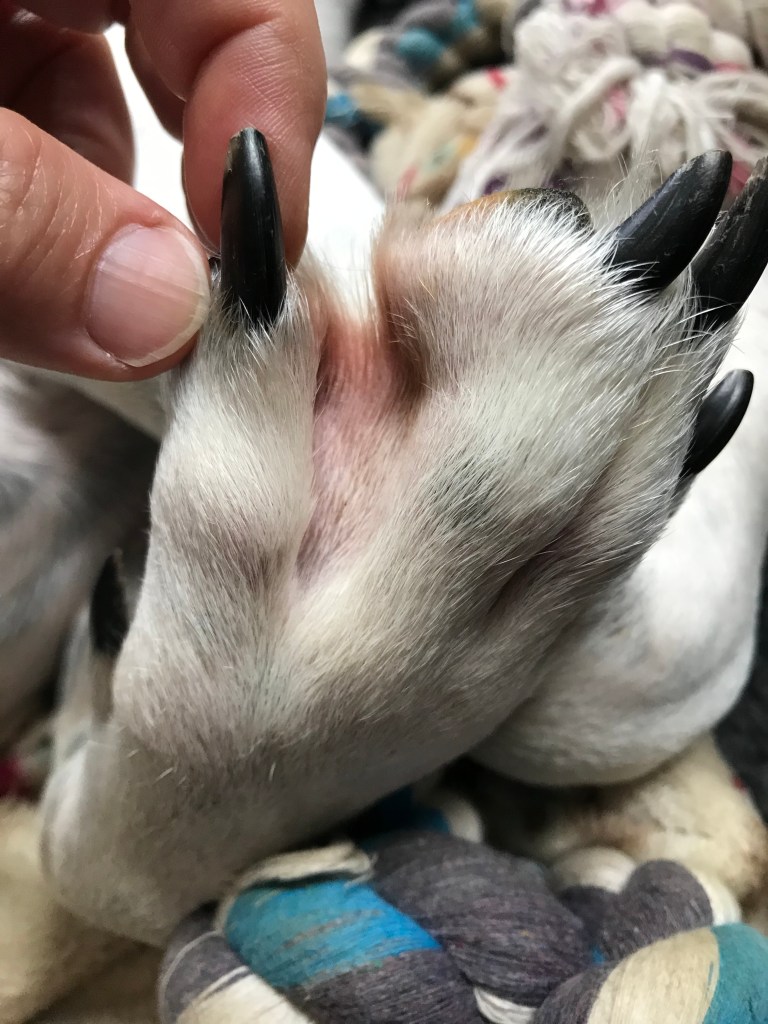
When I find a tick, I give it a little tug first to see if it’s loose. If it’s attached, it’s war. I do this:
Soap up the cotton swab, and apply soap directly to the little bugger. Sometimes just swirling the soap all around the tick is enough of an irritant to make the tick let go. If not, and I’ve been rubbing the soap on for a good minute, it’s time to use the V-shaped tool. I press the tool against the skin, and use the “V” to scoop the tick off, moving in a straight motion. Some say it’s best to just use the tool, and skip the soap. Those people are probably better at tick-scraping than I am. I like that the soap makes the tick let go, either a little or a lot, before I try to scrape it. The goal is to get the WHOLE tick.
Once the tick is free from skin, it’s time to dunk it in the waiting Cup of Death. I shove it right in there, making sure it sinks to the bottom of the isopropyl alcohol in the cup. The legs stop moving within a minute or two. But I usually wait a long time, before I dump the contents from the cup. Best to be sure.


 Puppies are Jerks
Gogo has done it again. A wealth of information and humor all at once
LikeLike